Book Review: “Pan” by Michael Clune
Reviewed by Steven G. Kellman
The symptoms of a panic attack are often indistinguishable from what an artist experiences in the throes of creation – heightened sensitivity, the feeling that everything is strange, and the dissolution of time and space. Fifteen-year-old Nicholas suffers from an anxiety disorder that causes him to hyperventilate, feel separated from his own body, and fear for his sanity. It sends him, without relief, to the hospital and a series of therapists, but it also causes him, as narrator of Pan, to craft exquisitely estranged prose. He describes the dark-brown light of late summer, for example, as “brown like dehydrated urine, like molasses, like a Polaroid curling away from an open flame.”
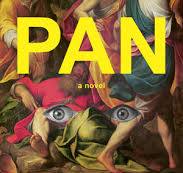
Pan is the debut novel of Michael Clune, who is best known for his 2013 addiction memoir White Out: The Secret Life of Heroin. While Nicholas’s friends are perpetually stoned on various psychedelics, he does not indulge. He does not have to, because he is already experiencing the intensive awareness and melting of boundaries common to acid trips. Breathing into a paper bag brings only temporary relief. He cannot sleep because he dreads extinction and is convinced that “sleep is the cousin of death.” Nicholas is a misanthrope who believes: “The sound of the American public is a deafening, monstrous roar, without syllables, without pauses, without increase or decrease. It is the constant bellowing and thrashing of a beast.”
Sent by his mother to live with his divorced and distant father in a “spiritually inert” suburb of Chicago, Nicholas considers the fracturing of his family as a possible factor in his panic attacks. Another is likely class. While Nicholas’s mother makes a living cleaning other people’s houses and he gets around by bus and bike, he hangs out with rich kids who live in wealthy neighborhoods and drive fancy cars. Much of the novel takes place in a barn on expensive private property. There Nicholas’s best friend Ty, his girlfriend Sarah, and two older guys, Tod and Ian, trade snarky, gnomic comments.
Mostly terse, Nicholas occasionally erupts into frantic monologues. Triggered on the subject of “Hollows,” the living dead who are the opposite of the panic-stricken, he exclaims: “The toys, the fools, the underlings, the cultists, the cultic fanatics of the endless unconsciousness of matter – that’s what these people are who buckle up their seat belts, who tie their shoes, who say prayers when the airplane hits turbulence, who won’t allow guns in their homes, who take only the recommended dosage, who swallow multivitamins, who don’t smoke, who don’t steal, who drive the speed limit, who push the rock up the hill, who vote, and who fall into the abyss of unconsciousness every night, who place their necks on the altar of night, who let the knife of the unspeakable transition to emptiness, to ending, to nothing, come down on their necks while they’re thinking about Florida, about waffles, about breasts, about money!”
These are the antithesis to Dean Moriarty’s “mad ones, the ones who are mad to live, mad to talk, mad to be saved, desirous of everything at the same time” in Jack Kerouac’s On the Road. Like much of the rest of Pan, the passage is hysterical – in the sense both of disturbingly overwrought and manifestly ludicrous. The admixture of horror and humor is like Nicholas’s desperate ploy to divert a liquor store clerk from asking for his ID by arriving in a wheelchair. It is an absurd gambit, and it does not work.
Nicholas attends a high school run by stern Catholic nuns. Visiting its library, he learns that the word “panic” is related to Pan, the Greek god of disorder. He becomes convinced that Pan lurks within him waiting to burst free. Titles cannot be copyrighted, and Clune’s Pan should not be confused with the 1894 novel by Norwegian Nobel laureate Knut Hamsun. This is a coming-of-age story, and, though Nicholas is as sassy as Holden Caulfield, he is more meditative. His existential epiphanies induced by realizing the foreignness of everyday objects resemble the unsettling visions undergone by Antoine Roquentin, narrator of Jean-Paul Sartre’s Nausea. But the cosmic joke is that they are also ponderous adolescent banalities. Hovering between despair and dyspepsia, Clune’s singular text fits Nicholas’s definition of strong writing: “The fabrication of new shapes for my mind to move into.”
——————————————————————————————————————
Pan; by Michael Clune; Simon & Schuster; 2025; $29.00.