
Book Review: “The Brittle Age” by Donatella Di Pietrantonio
Reviewed By Steven G. Kellman
Dedicated “To all the women who survive,” The Brittle Age portrays survival as an ambiguous proposition. It traces the reverberations from horrific violence in Italy’s mountainous Abruzzo region that was committed against three young women thirty years ago. The novel is narrated by a physiotherapist named Lucia who was nineteen years old at the time of the crimes. Her best friend, Doralice, barely survived to testify about the attack that took the lives of her two companions, sisters named Tania and Virginia. Less interested in the gory details than in the ripples expanding outward over the years, the novel does not immediately identify the crime, and, until the dramatic final pages, it does not provide a full picture of what happened in 1992 near a cliff called Dente del Lupo (Wolf’s Tooth).
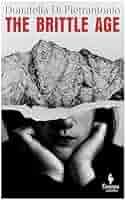
Although she draws from actual events in Abruzzo, Donatella Di Pietrantonio jumps back and forth between past and present and focuses as much on Amanda, Lucia’s twenty-year-old daughter, as on an atrocity that occurred before she was born. As the book begins, during the Covid pandemic, Amanda has returned home after dropping out of her university in Milan. Listless and lethargic, she mopes about, unnerving and disappointing her worried mother. “I can’t accept that my daughter will achieve less than me,” Lucia says. “Her renunciation is my failure.”
There are many failures in the novel. Lucia’s marriage to distant Dario is expiring of inanition. “We’re losing each other like this,” she observes, “without passion and without blood.” Lucia harbors residual survivor’s guilt over what happened to Doralice; she, too, might have been a victim if only she had not gone instead to the beach that day. Doralice’s life would not have been ruined if Lucia had invited her friend to join her in her seaside outing. Furthermore, if only she had rushed to Doralice’s side during her time of urgent need, her friend might not have moved to Canada.

Amanda abandons the university in the immediate aftermath of a mugging that might also have been a sexual assault. Is her current torpor a response to trauma? Is it similar to the depression that afflicted her mother’s generation after the crimes at Dente del Lupo? The toponym, which serves as the final three words of the novel, recalls the Latin adage “Homo homini lupus” – man is wolf to man. The image of a wolf’s tooth also makes it hard not to recall that Di Pietrantonio’s daytime profession is pediatric dentistry.
When a lonely immigrant shepherd named Vasile assaults three women, the rural folk of Abruzzo lose their innocence. Certainty and security are dissolved. “We grew up in a single night,” observes Lucia. From now on, they would always be alert to malice. The prosecutor brought in to try the young man charged with rape and murder declares: “No place is safe. Wherever man goes, he can bring evil.”
A vivid sense of place – the Maiella, a massif in the Central Apennines – animates the proceedings. A space where sheep safely graze, it seems an idyllic setting, until the assault on three women reveals that it is not. Lucia’s father owns the land on which the attack took place, but now, convinced that “his woods had betrayed him,” he feels nothing but revulsion toward the scene of the crime. When he transfers the property title to Lucia, she assumes responsibility for everything. Should she sell out to a greedy out-of-town developer who has no commitment to the natural environment? The consequences of the assault against Doralice, Tania, and Virginia continue to ripple outward three decades later.
The Brittle Age received the Strega Prize, Italy’s most prestigious literary award, elevating Di Pietrantonio, with this, her fifth novel, into the firmament occupied by Cesare Pavese, Alberto Moravia, Giuseppe Tomasi di Lampedusa, Giorgio Bassani, and Elsa Morante. It was transposed into English by Ann Goldstein, who has also translated Morante, Primo Levi, and Elena Ferrante. Lucia sings in a community choir that, after suspension during Covid, seeks to recover its collective voice. Goldstein’s deft and terse translation gives voice to a woman whose devastating ordeal has left her almost without words.
——————————————————————————————————————
The Brittle Age; by Donatella Di Pietrantonio; translated by Ann Goldstein; Europa Editions; 2025; $18.00.