Book Review
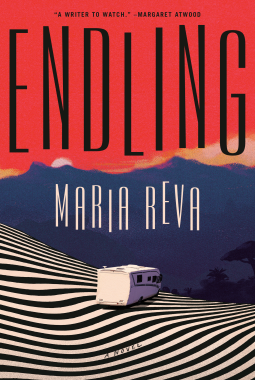
“ENDLING” by MARIA REVA
Reviewed by Steven Kellman
During the current Sixth Mass Extinction, two million species are, according to a study published in 2023, in imminent peril. Pity the endlings, the last survivors of species on the verge of disappearing. Pity poor humanity, largely responsible for the accelerated extinctions that endanger it as well.
At the outset of Endling, Ukrainian-Canadian Maria Reva’s second book, after her 2020 story collection Good Citizens Need Not Fear, the malacologist Yeva is scouring the Ukrainian countryside in search of rare varieties of gastropod endlings. Sacrificing creature comforts and human company in her desperate quest to document the precarious fate of snails, she is herself a sort of lonely endling. To facilitate her research, Yeva has repurposed a van as a mobile laboratory. To cover her expenses, she has contracted with a Canadian agency organizing romance tours – travel opportunities for foreign bachelors to meet and marry Ukrainian women. Although she has no intention of being anyone’s bride, Yeva gets paid to meet the men.
She meets two other Ukrainian women working for the romance tour – an 18-year-old beauty named Nastia and her older sister Sol. They are the daughters of Iolanta Cherno, a notorious radical feminist known for staging nude protests against patriarchal oppression. But it has been months since anyone, including Nastia and Sol, has seen Iolanta in Kyiv. Eager to lure their mother out of hiding, they concoct a plot more audacious than anything Iolanta ever attempted. After Yeva agrees to let them use her mobile lab, they cajole 13 of the foreign bachelors into it, lock them in, and hold them hostage. They intend to release the men in a flamboyant exposé of the international marriage industry.
It is a preposterous scheme, making the novel a raucous entertainment – except that shortly after the bachelors board the van, Russia invades Ukraine, Kyiv is assaulted with bullets, bombs, tanks, and missiles, and the novel’s tone abruptly shifts. Nevertheless, intent on rescuing a unique snail, Yeva drives the van and its motley occupants from Kyiv directly into the path of the Russian invaders – hundreds of miles south to Kherson. Her malacological obsession compounds the absurdity, but their encounter with real violence and bloodshed makes this a painfully dark comedy.
But that’s not all. About a third of the way through the novel, Maria Reva inserts a conversation she has with her agent about Endling as well as an application for a travel grant to Ukraine in support of writing the book, which, she states, “explores the problematic practices that beset the international bridal industry, simultaneously interrogating the hackneyed, albeit persistently prevalent, Western perception of Ukrainian women as either docile and acquiescent ‘mail-order brides’ or wily and deceitful scammers.” This is followed by two pages of Acknowledgments, one page “About the Author,” and “A Note on the Type” – with much of the novel yet to come.
The effect is metafictional, breaking the fourth-wall illusion and reminding us of Reva’s literary contrivance. This is, after all, a cleverly concocted fiction. However, the author, who moved to British Columbia from Ukraine as a child, is not just showing off. She is deliberately compounding fact and fiction, evoking what one of the bachelors, a Canadian-Ukrainian mechanical engineer named Pasha calls “The uncontrollable, ever-shifting essence of the universe.” Reva is concerned for the safety of an 87-year-old trapped in Kherson, because he is not just a fictional character but her actual grandfather.
The ever-shifting essence of Endling shifts again with the appearance of a Russian film crew in Kherson. Their mission is to document the glorious liberation of Ukraine during Moscow’s “special operation.” The director stages a scene in which Ukrainian women pretend to welcome Russian troops into their town with symbolic bread and salt. Meanwhile, the author frets over the fact that she can control her book but not the war. She is also wary of exploiting the conflict in order to write a book. “Am I no better than a snail, sniffing out the softest, most rotten part of a log to feast on?” she asks.
When Nastia summarizes Endling to the grandfather in Kherson, he dismisses it as “Not the kind of book I’d usually read, to be honest.” If so, he’d be missing out on an extraordinarily inventive achievement, a work at once exuberant and grievous. Reva is still in her thirties, and her first novel ought not to remain an endling.
——————————————————————————————————————
Endling; by Maria Reva; Doubleday; 2025; $28.00.