
Book Review
“Grand Finales: The Creative Longevity of Women Artists” by Susan Gubar
Reviewed by Steven G. Kellman
Some artists – Jean-Michel Basquiat, Emily Brontë, James Dean, Jimi Hendrix, Sylvia Plath, Arthur Rimbaud – flash across the firmament before abruptly flaming out. No less spectacular are those who manage to be productive into their eighties or nineties. Beyond tips about diet, exercise, and sleep, aged artists might have something to teach us about facing the inevitable end.
Best known as co-author, with Sandra Gilbert, of the landmark feminist study The Madwoman in the Attic, Susan Gubar is now eighty. However, at sixty-three, she was diagnosed with ovarian cancer and told she had three to five years to live. After experimental treatments and agonizing struggles, she has survived to be more productive than ever. In her own courageous old age, Gubar has turned to examine how nine creative long-lived women spent their final years.
Our gerontophobic contemporary American culture worships youth and slights the elderly. Women, in particular, get defined by their physical appearance, and, when that fades, they are dismissed as crones, hags, and biddies. Gubar celebrates the pluck and inventiveness of women on the verge of extinction.
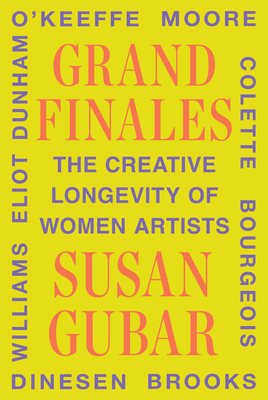
Her nine women are a motley bunch. English, French, American, and Danish, they excelled in fiction, painting, poetry, music, and dance. One of them, George Eliot, was not even especially old when she died, at sixty-one, though Gubar focuses on her dramatic transformation after the death of her longtime companion George Henry Lewes and during her brief marriage to John Cross, twenty-one years her junior. The others are Colette (81), Georgia O’Keeffe (98), Isak Dinesen (76), Marianne Moore (84), Louise Bourgeois (98), Mary Lou Williams (71), Gwendolyn Brooks (83), and Katherine Dunham (96). About the group, Gubar concludes: “Because of their diversity, my nine old ladies would have made a wacky baseball team and an even greater Supreme Court.” There are no bunters on that baseball team, and all are proud dissenters.
It would be foolish to generalize about aging women artists on the basis of only nine. Marian Anderson (96), Agatha Christie (85), Ina Coolbrith (87), Imogen Cunningham (98), Helen Frankenthaler (83), Françoise Gilot (101), P.D. James (94), Eudora Welty (92), and Laura Ingalls Wilder (90) spent their final years differently than the nine artists of Gubar’s book. And Wu Zetian, the emperor of China who died at eighty-one, Hildegard of Bingen, the nun, writer, and composer who also died at eighty-one, and Eleanor of Aquitaine, the queen of both France and England who died at eighty, would offer useful perspectives on what it was like to be an old woman in medieval times.
Recognizing the heterogeneity of her chosen women, Gubar groups them by triads into sections titled “Lovers,” “Mavericks,” and “Sages.” The lovers – Eliot, Colette, and O’Keeffe – were cougars, defying the common misconception that the elderly are sexless. Each remained attractive and passionate enough to take up with a younger man. The mavericks – Dinesen, Moore, and Bourgeois – dramatized their own idiosyncrasies. The sages – Williams, Brooks, and Dunham – were empowered by faith to transform themselves. Gubar concedes that her categories are porous, that mavericks could also be lovers and sages mavericks.
Asked for the secret of her longevity, the painter and potter Beatrice Wood, who died at 105, replied: “I owe it all to art books, chocolates, and young men.” Many women and men aspire to centenary senescence, but Wood’s recipe would not work for everyone. It is luck rather than virtue that grants some the privilege of a relatively long life sufficiently free of pain and disability to be creative. Gubar’s gals are gumptious old ladies, but blame lupus, not lack of spunk, for Flannery O’Connor’s death at thirty-nine.
It would be interesting to see a study examining how gender affects the final years. Was the experience of such long-lived men as Saul Bellow (89), Elliott Carter (103), Marc Chagall (97), Aaron Copland (90), Stanley Kunitz (100), Michelangelo (88), Pablo Picasso (91), Bertrand Russell (97), George Bernard Shaw (94), and Giuseppe Verdi (87) significantly different from the final years of Gubar’s women artists? Many artists, female and male, do not enjoy the luxury of a grand finale. Their departures are blighted by agony, sorrow, and dementia. The happy few, by contrast, make the most of the dying light. When the author Ursula Le Guin, at eighty, was asked what she did in her spare time, she replied: “I am going to be eighty-one next week. I have no time to spare.”
—————————————————————————————————-
“Grand Finales: The Creative Longevity of Women Artists”; by Susan Gubar; W.W. Norton; 2025; $35.00.